Aphasia Therapy
Aphasia Therapy
What’s included?
Eight short modules. Work through them in any order, and come back whenever you like. Your progress is always saved.
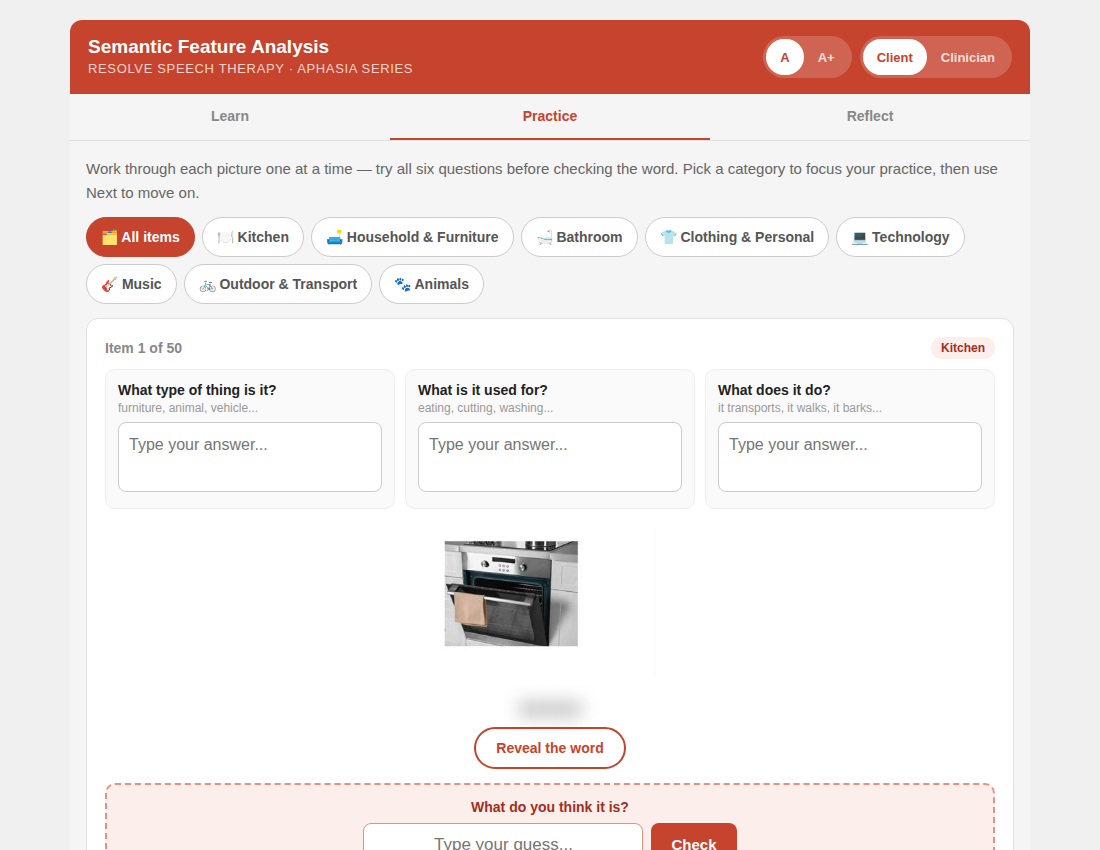
Semantic Feature Analysis: Strengthen word-finding by exploring what a word means, looks like, and connects to.
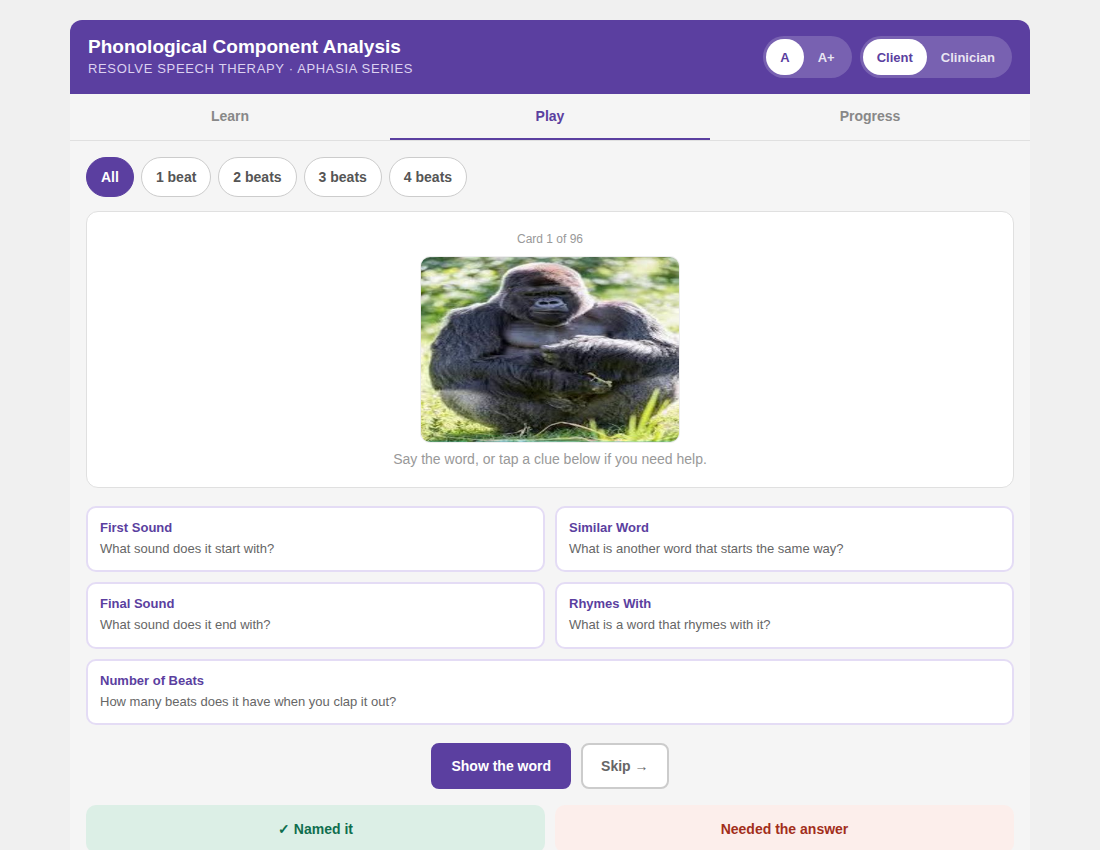
Phonological Component Analysis: Use sound clues like first letter and rhymes to help a word come out.
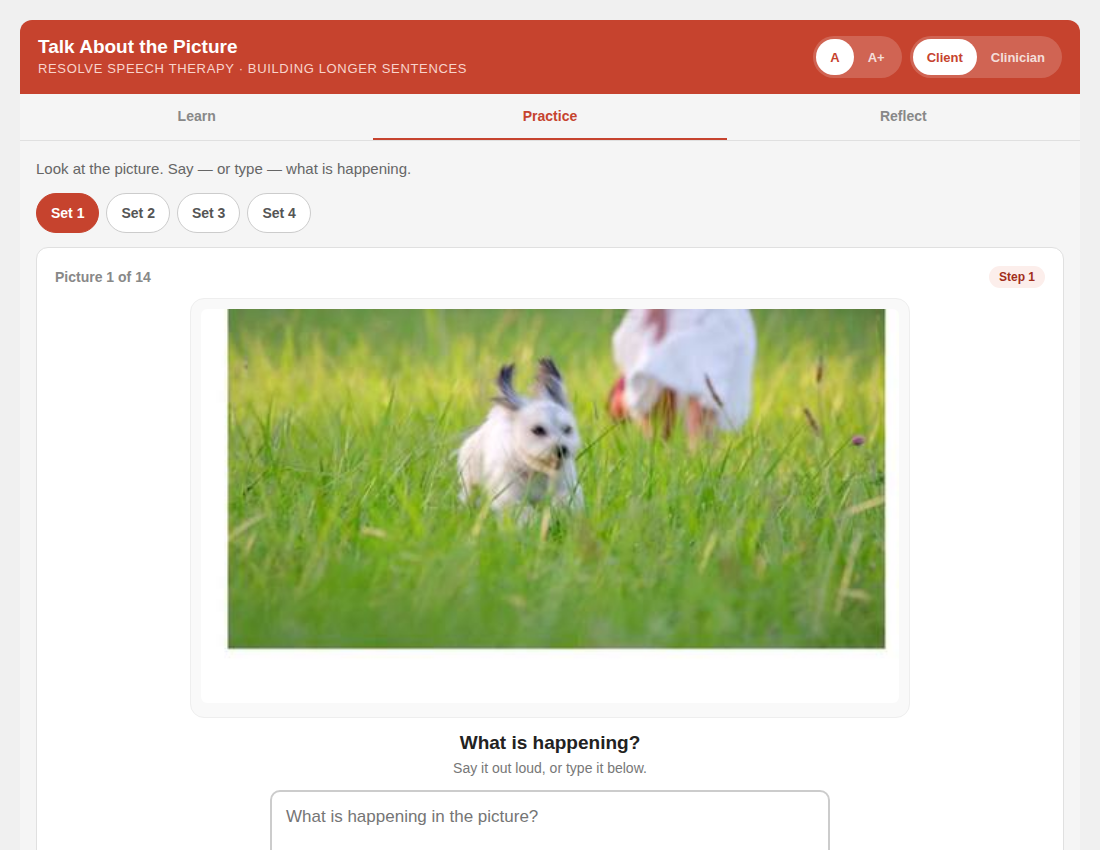
Response Elaboration Training: Learn to expand short answers into fuller, more complete sentences.
Promoting Aphasics' Communicative Effectiveness (PACE): Practise real back-and-forth conversation, using whatever communication method works.
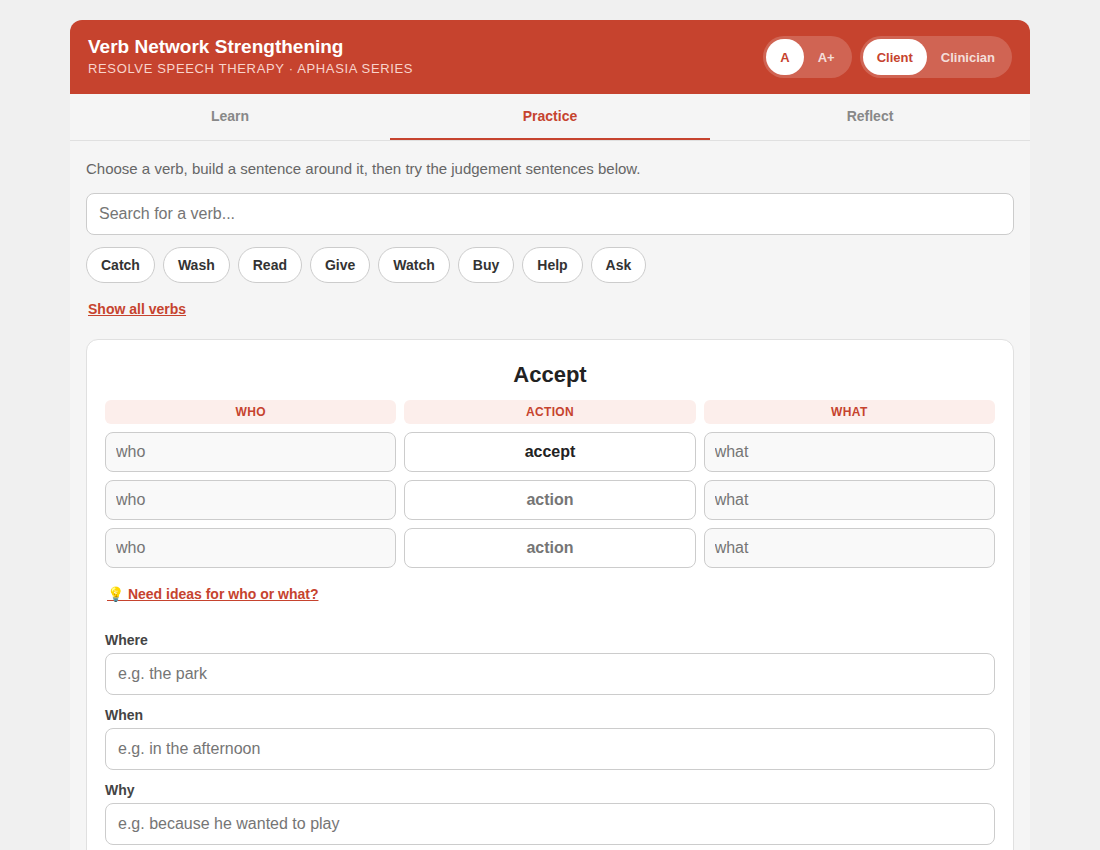
Verb Network Strengthening Training (VNeST): Practise verbs and the people or things connected to them, to build stronger sentences.
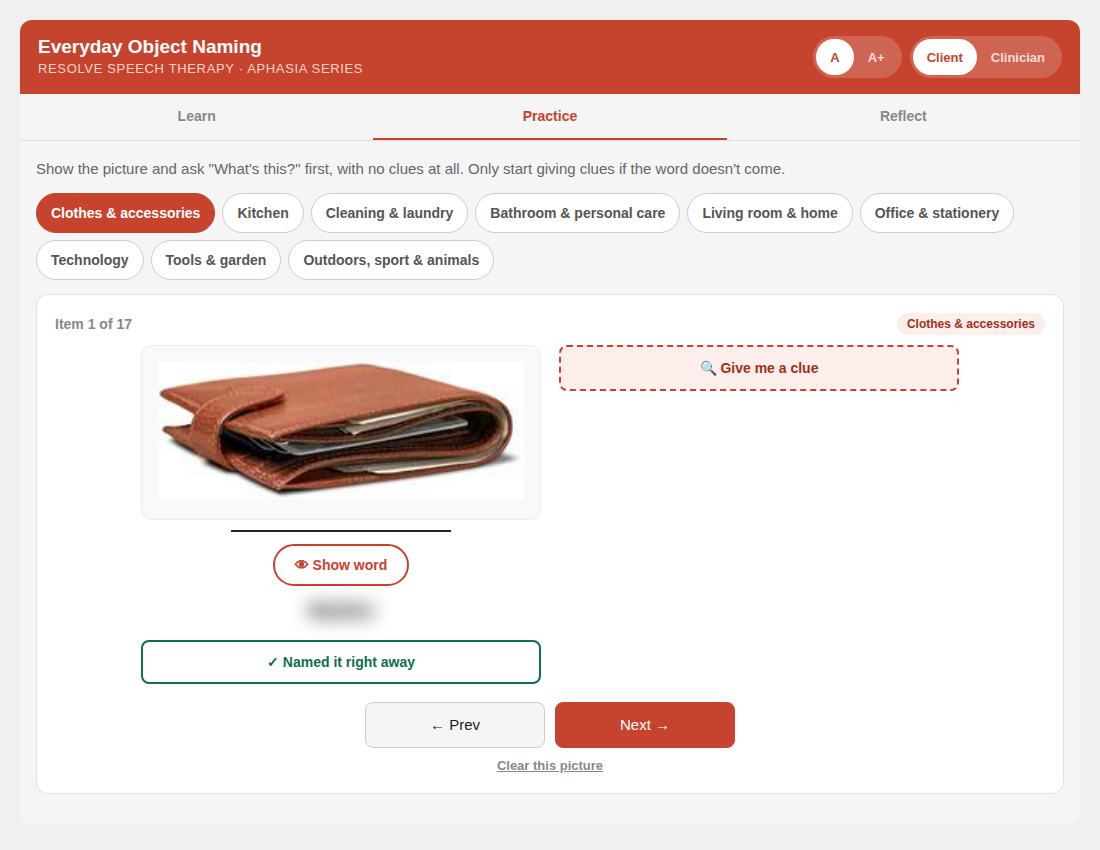
Everyday Naming with Cueing Hierarchy: Step-by-step naming practice for everyday objects, with built-in cueing support.
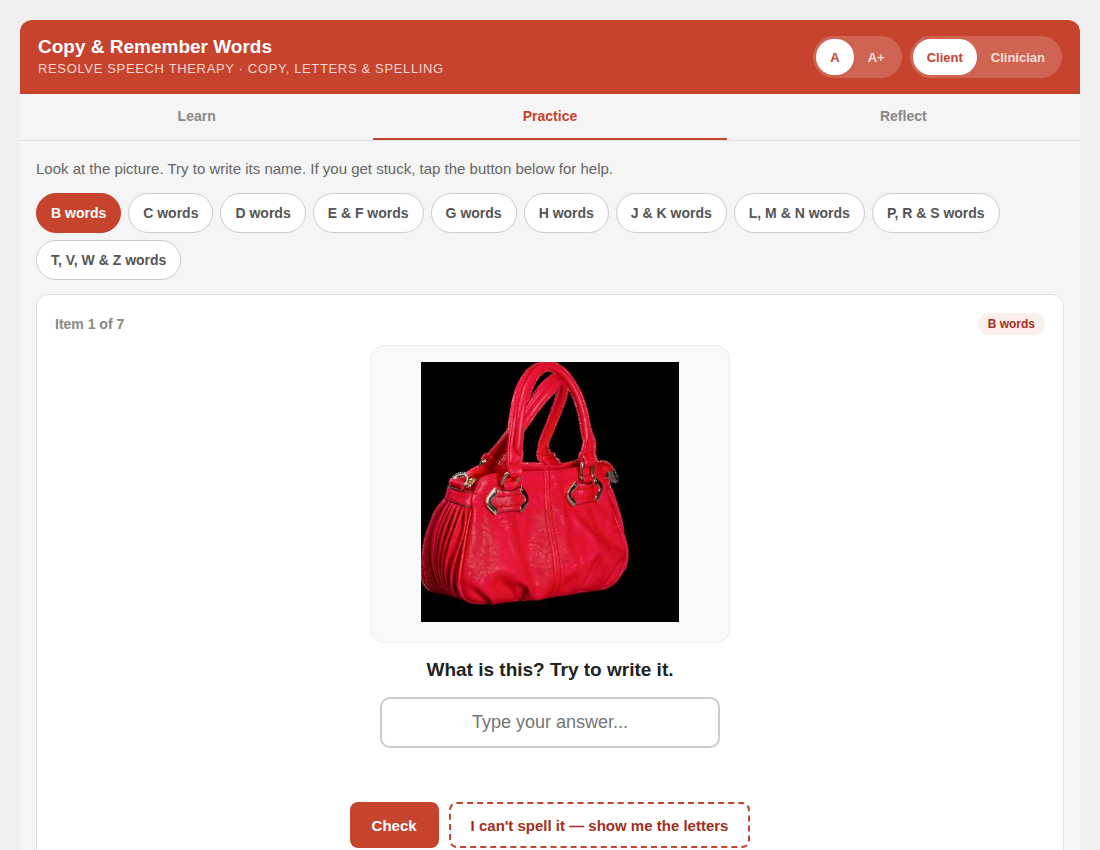
Anagram Copy and Recall Writing Treatment: Rebuild written naming through copying and recall practice.
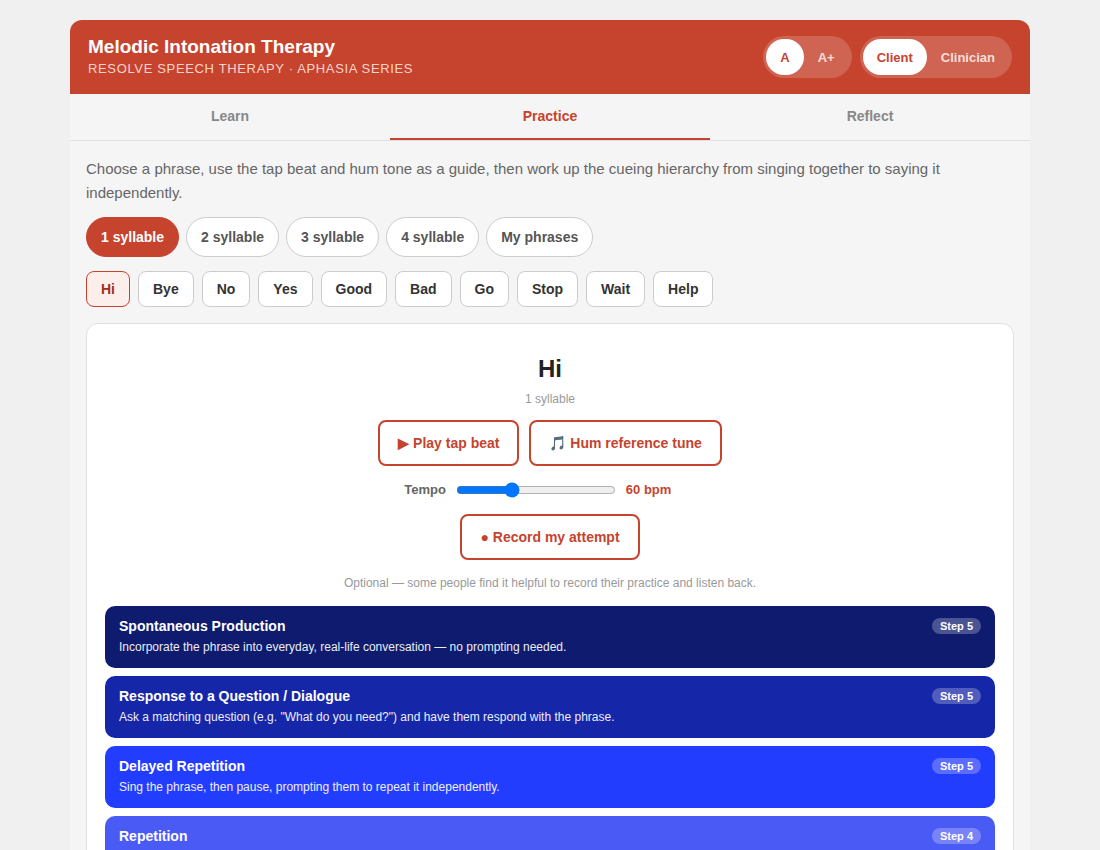
Melodic Intonation Therapy: Use melody and rhythm to unlock speech after a stroke.
Benefits
Email progress to yourself or a client
Session notes save automatically and send straight to Gmail in one tap, so there's no writing it up later.
Client and Clinician modes
One toggle switches between simple self-guided practice and full clinical documentation.
Genuinely interactive
Tap-through exercises with built-in cueing and feedback, not a static PDF to scroll past.
Printable PDF versions
Prefer paper? Every module is also available as a downloadable, print-ready PDF.
Check it out.
Try before you buy
Everyday object naming
Ten pictures. Take as long as you need.
About this activity
After a stroke or brain injury, it can be hard to find the word you want, even when you know exactly what you mean. This is called anomia, and it is one of the most common parts of aphasia.
Thinking about what something looks like, what it does and where you find it can help the word come. That is what this activity practises.
How it works
- Look at the picture and try to say its name.
- Stuck? Tap Help me to think about the object together.
- More help gives you the first letter, then the whole word to read.
- Answer five quick yes or no questions about it.
- Sum up: pick two things about it, then say and write its name.
You can move to any picture at any time using the numbers at the top. There is no timer.
About this preview
Ten everyday objects with a six-step cueing hierarchy built on Semantic Feature Analysis: present the picture, guided SFA (group, use, action, location, appearance), first letter and first sound, written model, five semantic judgments, then a sum-up recalling two features with the spoken and written name.
Using it in session
In Clinician mode the whole protocol for each item is on one screen, with SFA answers and the expected response to each judgment. Score the step at which your client named the item, mark each judgment, and add notes. A summary is ready to email from the Progress tab.
Using it for home practice
Switch to Client mode. Clients work through the steps one at a time, check their own answers and type the written name. Progress saves in their browser so they can email it to you.